

Shift the baseline feeling you have toward yourself from shame, embarrassment, or upset to one of
understanding, compassion, and collaboration.
Live Session via Zoom
Practice at home to get even deeper into who you are and how to relieve yourself of that which holds you back.
Wednesday June 18th 5:30 – 7:30pm
Stop Holding Things Against Yourself
If you’ve ever cared for yourself as an after thought or blame yourself for doing things wrong, this program is for you.
Utilizing yoga to soothe the nervous system, along side journaling and repetition of self forgiveness statements and affirmations, you will begin the process of a gradual shift in your self perception. From someone who you think is a screw up to one who lives safe at home within yourself.
You haven’t done anything that needs forgivness. Yet, we still hold things against ourselves. Feelings of shame and guilt can linger even when our actions weren’t purposefully malicious.
Each of the four sessions of the (Self) Forgiveness Project includes a focus, yoga classes with stretching, breathing techniques, restorative poses, guided relaxation, and meditation. Use each class with the corresponding section of the workbook to soothe your nervous system, clear out emotional baggage that has built up over time, then replace that baggage with a feeling of acceptance and care.
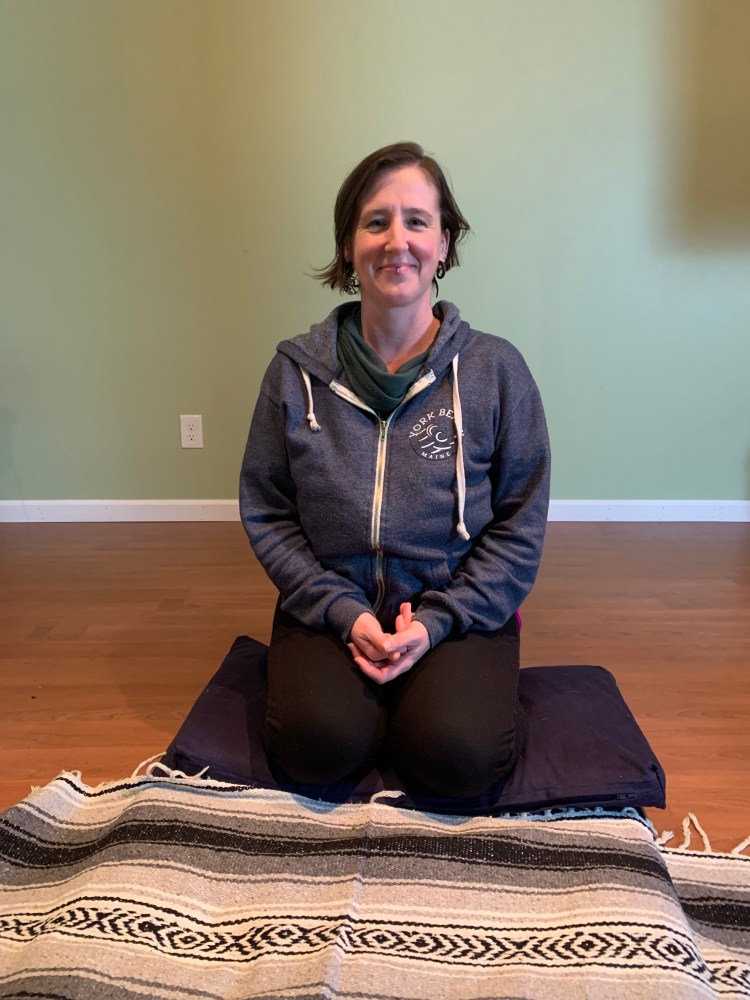
Hello! My name is Vanessa Chambers. I have taught yoga for almost 20 years. The (Self) Forgiveness Project began because I am good at gratitude.
Gratitude is the practice of applying the feeling of appreciation to your circumstances. It can help salve feelings of despair, resentment, and hopelessness.
What I noticed when I tried for a daily gratitude practice was it didn’t touch certain burdensome emotional content. Memories that popped up and made me cringe at my behavior was me reliving, and thereby reinforcing, the feeling of embarrassment at my reactions and subsequent behavior. I was holding things against myself and gratitude did not make it better.
What felt better was the feeling of forgiveness. It may seem silly sometimes because most of the time I haven’t done anything that warrants being forgiven. Having a reaction and an awkward social encounter doesn’t really rise to the level of doing something wrong. But, the feeling of being forgiven eased the weight of the embarrassment I was carrying for my behavior.
It all begins with a willingness to see yourself as a person worthy of forgiveness. This program as an opportunity for you to practice crafting an inner monologue that has a loving tone. One that supports you and reassures you. Especially as you dig into what you would rather forget.
Session 1: Grounded
This session is an examination of how you relate to ground.
Can you let go of that which keeps you disturbed or suffering? Can you rely on an external source of stability or remember that you are made of the same materials as the ground and therefore steady in your own right? Can you set down your baggage?
Maybe you have difficulty getting back up again under the weight of pain. Are you stagnant, overly reliant on the outside world for support and validation?
Perhaps you tend to run away? Maybe your relationship to the idea of home is dysfunctional.
It’s hard to remember that we are always in connection with what we need. We are easily overwhelmed by the information coming in through our senses. Preoccupied with what is outside of ourselves, we may have feelings of uncertainty manifesting as anxiety, fear or disconnection. We can lose sight of the fact that we are safe and at home within ourselves at all times; that we have infinite spaces within us to find shelter, care, and rest.
We can find solace within ourselves at any time.
Session 2: Digested
The integration or elimination of stimuli and emotional content is what this session is based on.
This session becomes a fulcrum. The tipping point over which you can truly embody wholeness within yourself, better understanding how what is outside of you influences your insides.
All asana are literal and metaphorical. Twists, the poses that are done in this session, open the side body, squeeze out the organs, and maintain the flexibility of the spine.
They also clear out anxiety, allow the mind space to integrate information or eliminate thoughts and emotions that are toxic.
Session 3: Tuned In
With your inner space cleared of plaque, you can have a profound experience of stillness, spaciousness, and silence.
Cathedral, Sanctuary, Refuge. Our inner space is where we live. Every day we wake to face ourselves, to varying degrees of success. We must even face what is subconscious through our dreams.
Forward folds are the physical shape to take to begin the process of moving inward. Strengthening the front of the body stretches the back, which is a reversal of typical standing in the world postures. You collect yourself into yourself with forward folds. Letting the head lower signals the front, problem solving part of your brain that you are ready to settle.
Coupled with longer exhalations that signal your nervous system that you’re ready for rest, this practice will give you the opportunity to redirect your priorities from outside of yourself to inside.
Session 4: Into the World
Stay with yourself.
You may know who you are but who are you when you’re interacting in the world? Are you big, bold, and taking up space? Are you quiet, careful, and prone to hiding?
There are many iterations of behavior that people take on as they navigate the outside world. One that I feel continually called to work on is to stay with myself. I, through a number of mechanisms, tend to change my behavior when observed, and depending on where I am. I’ve practiced yoga for a long time and have gradually begun to be able to feel more at ease when being observed. But, there is still the noise of my conditioning laid over my behavior.
The physical part of our practice will include warm up to, and practice of, back bends. Much as forward folds are the physical shape of turning inward, back bends are the shape of being out in the world. The physical and mental act of embracing what comes at you.
Recorded Series
The recorded version of the (Self) Forgiveness Project rolls out over 4 weeks. You will be sent an email every week with links to the recorded yoga class and access to the corresponding workbook. Once you have completed the series you’ll be invited to our live affirmation deck creation session!
 Slow But Steady Nature